05 November 2026
Edge Blog Posts and End Assemblies Discussed
Presented by @gregoryfence-builderkpmz025
If you have ever driven past a residential property where the fence line looks tight and settled up, chances are somebody developed the framework with major attention at the ends. Edge posts and finish assemblies are the "framework" minutes of a fencing. They are where lots stack up, where the fencing attempts hardest to rack, and where little faster ways usually turn up later as sagging, leaning, or bothersome voids that seem to expand over time.
As a general rule, the majority of property owners obsess over the panels or pickets. Professionals obsess over the messages and equipment, since that is what establishes whether a fence behaves like a strong obstacle or like a row of flexible suggestions.
This article breaks down what corner articles and end settings up actually do, why they frequently stop working when they are underbuilt, and exactly how to make the decision calls that great Fence contractors and Fence installers have a tendency to solve on the very first job.
Why edges and ends are various from line posts
A typical run of secure fencing has articles at periods, typically with rails or bolts that keep the mesh or wood aligned. Those line posts mostly deal with normal, descending and side forces along the length.
Corners and ends handle 3 extra realities:
-
Directional change
At an edge, the fencing goes from "pushing this way" to "pushing the various other means". Even if wind is light, the fencing is still standing up to movement in two various directions at once. -
Full fencing tension and built up load
The farther you are from the terminal point, the more tons obtains "dispersed" via multiple blog posts. At the end or edge, all that accumulated force has nowhere to go other than into the terminal structure. -
More visible failure modes
When a line message shifts slightly, it could be recognizable as a little imbalance. When an edge post changes, the whole geometry heads out, and gateways, returns, and surrounding fencing areas stop lining up.
That is why Fence contractor Melbourne staffs and secure fencing experts typically discuss incurable articles, supporting, and article embedment as if it is a different craft. It is not extravagant, but it is the difference in between a fence that stays crisp for many years and one that gradually drifts.
What an "end setting up" actually includes
People state "end setting up" like it is one component, yet in method it is a system. An end assembly is the terminal arrangement at the end of a fence run, and it is created to hold the fencing line against sideways forces.
Depending on the fence kind, you might see:
- A heavier edge or end post
- Bracing rails and fixings
- Tie-offs or wire tensioning factors (with particular designs)
- Diagonal braces where appropriate
- Correct equipment placement and bolt sizing
- Concrete embedment sized for soil conditions and height
Think of completion setting up like the fencing's anchor point. If the support is too weak, everything else ends up being decorative.
Corner blog posts: the geometry problem
Corners develop both architectural and geometric tension.
When a fence is developed, each panel or sheet is reasonably inflexible. In time, weather and wind create pressures that wish to push or turn the fencing line. At a corner, those forces produce a rotational tendency, not just a push to one side.
From experience on websites, the most typical corner concerns I have actually seen are:
- The edge blog post mounted at the best elevation, however with insufficient embedment.
- A message set "straight sufficient" for the day, yet the brace geometry enables it to move as quickly as wind tons hit.
- Rails repaired in a manner that permits shear, instead of offering genuine triangulated stability.
- Small repairings utilized since they are practical, not since they are adequate.
A correctly carried out edge provides you 2 things: it stands up to the fencing's sideways push, and it protects against twist. That twist is commonly what causes doors and entrances to start binding, even when eviction itself is sound.
End settings up: standing up to racking and shear
Racking is the sideways distortion you get when the fencing attempts to develop into a parallelogram. End assemblies exist to prevent that.
Here is a sensible method to visualize it. Picture the fencing run as a lengthy bar. The line messages are like the supports under the lever. Completion setting up is like the hand holding the bar consistent. If the hand slides, the bar moves, and the fencing line follows.
Good Fence company and Fence installer teams focus on:
- Post strength relative to fence height
- Embedment depth and concrete quality
- Bracing configuration
- Fixings and rail alignment
- Fence tension settings (for designs that include them)
If you are dealing with chain mesh, for instance, tension can be significant. If the terminal is underbuilt, the fencing does not simply "sag", it can actually creep out of line.
The two components individuals undervalue: embedment and bracing
When a fence contractor is estimating costs, edge posts and end assemblies have a tendency to drive both material and labour. That is because 2 things are tough to do inexpensively and still execute accurately: appropriate embedment and proper bracing.
Embedment: more than "established it in concrete"
Embedment deepness is tied to elevation, soil, and neighborhood problems. There is no single magic number that works all over, and it is not smart to presume the same setup in clay, sand, or loam.
On a typical task, the embedment choice is a balance between:
- fence height and weight
- wind direct exposure and fencing type
- soil stability at excavating depth
- how degree and consistent the hole can be made
- water practices after rain
If the post embedment is shallow, the fencing might look excellent promptly, then move slowly as the ground cycles with moisture. If embedment is appropriate yet concrete is too thin or improperly positioned, it can still stop working. You want the message bordered effectively and the concrete put so you do not develop gaps along one side.
Bracing: triangulation defeats "additional timber"
Bracing is where several fences either end up being rigid or become shaky. A line blog post can be straight and stout, however if the bracing system is refraining the job, the setting up will still rack.
Diagonal bracing produces triangulation, which resists side motion better than counting on straight rails alone. With hardwood fence, the support positioning likewise influences just how tons travel right into the blog post and exactly how the rail joints behave.
In the area, I have actually viewed "attractive" fences fall short due to the fact that the braces were ornamental. They were installed in such a way that did not really quit motion. Later, the customer condemned the wind. The genuine issue was that the framework had actually not been triangulated at the terminal points.
Fence kinds and what adjustments at edges and ends
Terminal construction modifications with fencing material and format. Let's chat through a few usual scenarios without pretending there is one global formula.
Timber paling or picket fences
Timber fencings usually act like a collection of flat boards catching wind. That implies edge and end loads can be substantial, particularly with taller styles.
Key details tend to be:
- post size and types or treatment (relying on what is being utilized)
- the rail framework behind the palings
- where brackets and screws are positioned on rails and braces
- how the fence returns at edges are handled
With pickets that are spaced, wind can go through, which lowers stress contrasted to strong sheets. Still, the terminal points take the exact same lateral push and should be built accordingly.
Colorbond or metal sheet fences
With steel sheets, wind pressure can be considerable due to the fact that the sheets present a broad surface. The incurable structure usually needs to take care of both lateral and turning forces.
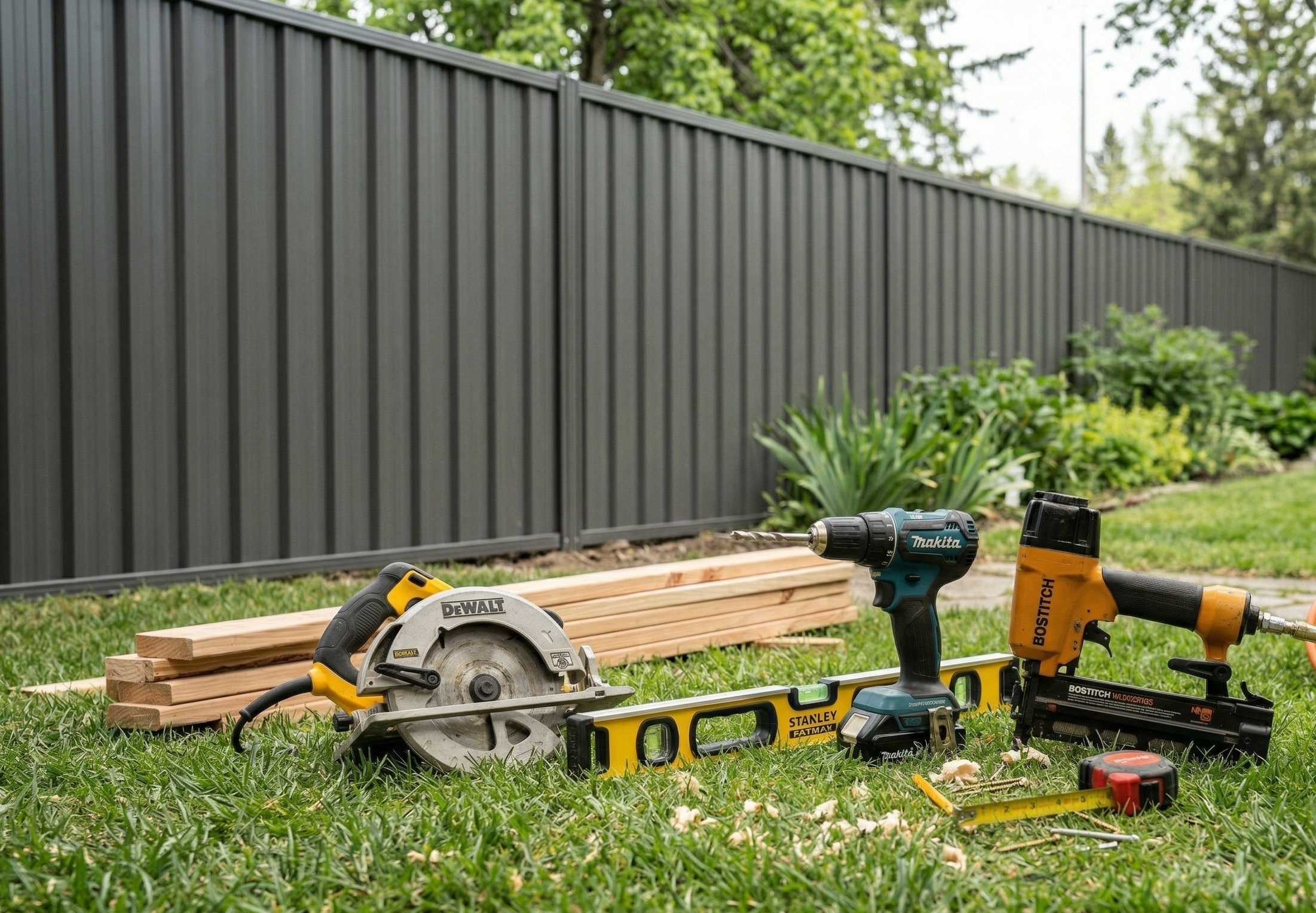
Important factors to consider include:
- hardware that can take shear forces
- posts developed to stand up to flexing and twist
- correct positioning so sheets do not "claim" to be straight while the terminal is moving
Chain mesh, balustrade, and panel mesh
Mesh fencings can be stealthily solid in stress, but the incurable factors are where the system either locks in or creeps.
For mesh, completion setting up generally requires the capability to withstand tension pressures and stand up to out-of-line activity. If tension is applied and terminals are weak, the entire fence can drift, and the mesh can begin to sag between posts.
That is why many fencing contractors Melbourne groups deal with completion assembly as a stress management and structural anchoring task, not simply "a post at the end".
Choosing the right post size and hardware
Homeowners typically inquire about article density, yet equipment selections matter as much as lumber thickness.
A stout post with weak dealings with can still stop working. Likewise, strong hardware with an undersized post embedment is not an actual repair, it is simply postponed failure.
In genuine project choices, a Fence company or Fence installer will usually consider:
- fence elevation and style
- panel spacing or whether the fencing is close-boarded
- number of rails and their material
- local wind exposure (open blocks need even more caution)
- proximity to driveways where gates and vehicle activity include complexity
- soil type and how much the ground holds throughout excavation
There is also a practical fact: terminal messages typically rest close to paths, landscape design, or existing structures. You could be constricted on how big a concrete pad can be, or just how deep you can go without hitting services. That is where excellent Fence contractors make use of reasoning and select an incurable design that still makes architectural feeling within the website constraints.
The entrance trouble: where end settings up end up being critical
If the fencing consists of an entrance, you typically have an end setting up that needs to do dual duty. It supports the fence run and it additionally holds entrance loads.
Gate lots consist of:
- the weight of the gate
- the force from opening up and closing
- twisting and hinge moment loads
- occasional impacts, like a vehicle door bump or an individual drawing eviction when it catches
An entrance on a fence line that or else looks penalty is where weak corner blog posts and end settings up turn up quickly. People criticize eviction hinge. Sometimes it is the hinge. Commonly it is that the incurable messages were not supported to take the genuine forces.
If you are planning an entrance, it deserves discussing the whole incurable system, not just the joint side. An excellent Fence installer will consider both sides and make sure the blog post and bracing geometry deal with the gate, so the fencing does not imitate a spring.
How to inform if a corner or end setting up is constructed well
You can discover a great deal by observing a fence in excellent condition and a fence that is drifting. You are seeking indications that incurable points are doing their job.
Here are a couple of signals that a corner or end assembly is solid:
- posts look plumb and stay plumb also after hefty wind periods
- rails and dental braces are aligned constantly, not "almost aligned"
- gaps at edges remain stable
- gates do not start rubbing against articles or rails within a period or two
- there is no visible wobble when you press gently near the incurable point
If you are evaluating an existing fencing, delicately test with your hand at the end or edge rather than pressing difficult. You are seeking activity in the incurable, not testing the entire fencing like a demolition job.
Quick sanity check for homeowners
If you are quoting or contrasting alternatives with a Fence contractor or Fence company, it aids to ask targeted questions. Below is a list you can take into a website go to:
- Is the corner or finish post increased in dimension compared with line posts?
- What embedment deepness and concrete placement strategy will certainly be used?
- What bracing or rail system is consisted of at the incurable points?
- Which hardware type and dimensions are utilized for rails and braces?
- How will certainly placement be regulated throughout installation so the incurable remains square?
The answers should be clear and certain. If they are unclear, or if they treat terminals as optional, that is a warning sign.
Trade-offs: cost, appearance, and lasting stability
Terminal structures cost more since they call for additional materials, extra labour, and cautious positioning. It is typical for a customer to ask whether they can "reduce the edges" to save money.
Sometimes you can readjust something without endangering efficiency, but various other times you cannot.
Here are the major trade-offs you Browse this site will experience:
-
More wood or steel supporting vs cleaner looks
Bracing can be slightly a lot more noticeable, particularly on lumber. Some clients favor marginal visual mess. An excellent professional can commonly position supporting where it is much less visible while still performing properly. -
Deeper embedment vs landscape design constraints
You might desire a superficial embedment to prevent disturbing existing landscaping. If the dirt is unstable or the fencing is tall, shallow embedment can be false economy. -
Heavier articles vs panel layout changes
Sometimes instead of upsizing blog posts all over, you can readjust panel spacing, minimize fence elevation, or transform the rail arrangement. That choice ought to adhere to the lots, not just the budget target.
In my experience, the best long-lasting outcomes originate from resolving the lots course initially. The look after that best fencing company obtains tuned around a framework that will really hold.
A sensible scenario: the fencing that "functioned" up until the first summer season storm
A property owner once explained a chain mesh fencing that looked fine for months. After that, throughout a windy period, completion assembly started to drift. Not dramatically in the beginning, yet enough that the gate began to misalign.
When we took a look at the fencing, the terminal blog posts were set up with concrete, and they were not undoubtedly rotten or fractured. The concern was that the supporting technique and tension management did not completely lock the incurable against both lateral motion and slight rotational twist.
The fence was not "badly developed" in the means people expect. It simply had the wrong equilibrium of stamina at the precise factors where forces concentrate. After the initial real tornado, the structure moved a little, then remained to creep.
That tale is common throughout materials. It is why corner articles and finish settings up are not an optional upgrade, they are the core of a fence.
What to ask fencing contractors when you are getting quotes
If you wish to compare quotes in a purposeful method, concentrate on just how the contractor manages the incurable points. Numerous quotes audio comparable externally, due to the fact that line posts and panels are very easy to rate. Terminals are where the true distinctions hide.
When you satisfy Fence contractors, a valuable technique is to demand details concerning the corner and end settings up, even if you feel uncomfortable asking "technical" inquiries. A qualified Fence installer ought to invite it, since it signifies you are serious about performance.
You can likewise ask how they deal with complicated website conditions, like:
- uneven ground near corners
- soil that collapses in excavation
- existing paving sides that restrict depth
- sloping blocks where line messages are evaluated different levels
If the professional has dealt with those problems before, the incurable system will mirror that experience.
Materials and approach, without the marketing fluff
You will likely see differences in how terminals are constructed across firms:
- some will certainly utilize heavier messages at edges and ends, others will rely more on rails
- some will brace diagonally, others will certainly use straight assistances that look durable however do not triangulate properly
- some will establish articles deeply and square, others will certainly prioritise speed
When you are selecting between a Fence company, you are not only purchasing products. You are purchasing right sequencing, placement control, and judgement when the site refuses to cooperate.
Corner blog posts and end settings up are also where installment mistakes turn up the majority of. A line post can be dealt with later on by tightening and changing. If a terminal runs out placement, fixing it typically means restoring components of the fence or altering the geometry, which is even more disruptive.
Long-term maintenance: keeping terminals healthy
Even a well-built fence can need upkeep. Incurable factors are where moisture, get in touch with factors, and equipment wear concentrate.
Maintenance relies on product. With timber, you typically look for signs of activity, splitting, and bolt deterioration in coastal or damp problems. With steel elements, you try to find rusting at joints and degraded finishes around fixings.
More notably, take note of the early indication:
- growing spaces near gates or corner returns
- rails appearing to twist
- posts that suddenly feel "loose" if you lightly check them by hand
- stains or splitting that recommend water has penetrated
If you resolve incurable issues early, you can sometimes protect against a tiny positioning issue from turning into an architectural rebuild.
Key takeaways for house owners and project managers
Corner posts and finish assemblies are the parts of a fencing that lug the consequences of everything else. Panels can be right, rails can be level, and workmanship can be cool, however if the incurable system is underbuilt, the fence will eventually start to relocate where it is the very least forgiving.
A sensible method to consider it is this: good fence does not simply stand up today, it stays in place after it has actually been pushed by climate, tension, and time. The incurable factors are where you prove that design.
If you are planning a brand-new installation or even assessing a fixing, treat the corners and finishes as the concern conversation. That is just how Fence contractor Melbourne specialists and seasoned Fence installers separate "looks right" from "will last".
If you desire, tell me what fence type you are thinking about, approximately just how high it will certainly be, and whether there is a gateway at either end. I can detail the normal terminal setting up method and the typical failing factors for that particular setup.